
Binge Eating Disorders: The Pervasiveness of Eating Disorders Among University Students
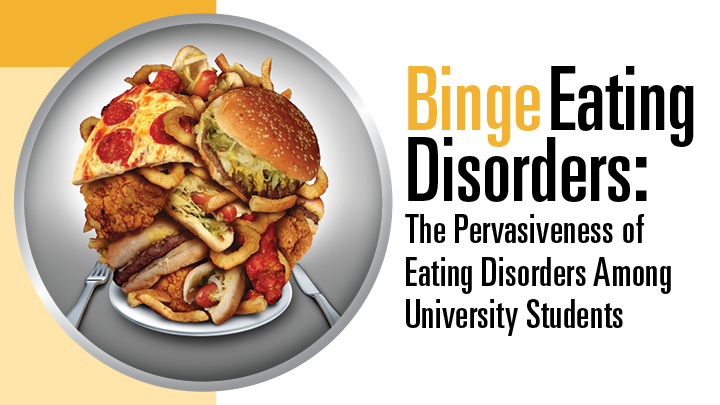
The transition from highschool to university can be very difficult and in some cases affect one’s eating habits. University students are alarmingly vulnerable to eating disorders, many of which are prone to a binge eating disorder (BED). BEDs are characterized as a life-threatening eating disorder of compulsively eating a high intake of calories or abnormal amount of food in one sitting. Binge eating occurs in regular episodes, on an average of twice a week for a long duration of time, prevailing in months or years.
BEDs may include the following;
- Discreetly eating a large quantity of food to the extent of discomfort within a short span of time, i.e. under a 2 hour period
- Ignoring body cues and reactions.
- Eating alone because of feeling embarrassed by how much one is eating.
- A lack of control during an eating episode and unable to stop eating or control portions
- Distress followed by an eating episode, i.e. guilt, shame, or distress
Warning Signs & Symptoms
- Physical symptoms of BEDs : Fluctuations in weight and stomach cramps.
- Emotional and behavioural symptoms: Withdraw from hanging out with their friends and family, for the fear of eating out and consuming too many calories.
- Fad diets such as the elimination of sugars, carbs or the adoption of veganism/vegetarianism is a common symptom
- There is intense shame and guilt associated with BEDs causing one to be heavily concerned with their body weight and shape, leading to obsessive exercise or frequently checking oneself in the mirror.
Health Impacts
BEDs have serious health implications, physically and mentally. Often, there may be some relationship with other eating disorders or mental illnesses. BEDs have a psychological toll on one’s body image and eating concerns, especially among young students. This may include a sense of body dysmorphia, the false belief of being overweight, unattractive and anxious over perceived flaws. It is a constant struggle between the body and mind.
The short term risks of these eating disorders are the life threatening case of a stomach rupture. Over time, high calorie intake increases the chances of sleep apnea, cancer, heart disease, high blood pressure, type 2 diabetes and arthritis
Treatment
Though it is a difficult journey, BEDs can be treated. Paths to treatment may include counselling, therapy, food journaling or medication. If you associate with the symptoms of a BED or are struggling with an eating disorder, contact your doctor or book an appointment with the Student Wellness Centre to learn about treatment options.
Sources
By: Ange Bitwayiki
Food & Nutrition, Mental Health & Mental Illness